Disclosure: T5 Golf may earn a commission when you purchase through links on this page. This does not affect our rankings. Prices were accurate at publish time on June 24, 2026 — Prime Day pricing changes fast, so confirm the live Amazon price before buying.
Quick Answer
Amazon Prime Day 2026 runs June 23–26. The best name-brand golf deals live right now: the Rapsodo MLM2PRO launch monitor at $550 (was $700), the Garmin Approach R10 at $399.99, the Bushnell Tour V6 Shift rangefinder at $311, and the Callaway Strata complete set at $456. Below are 11 deals from the brands you actually know — Callaway, TaylorMade-tier tech, Bushnell, Garmin, Srixon, Titleist, adidas and FootJoy — sorted by category. Prices change fast and many are limited-quantity, so check the live price before buying.
Best Prime Day Golf Deals 2026 — At a Glance
Product
Category
Was
Now
Save
Rapsodo MLM2PRO
Launch Monitors
$700
$550
$150
Garmin Approach R10
Launch Monitors
$499
$399.99
~$100
Bushnell Tour V6 Shift
Rangefinders & GPS
$400
$311
~$90
Bushnell Wingman View
Rangefinders & GPS
$200
$140
$60
Garmin Approach S70
Rangefinders & GPS
$649
$549
$100
Srixon Z-Star
Golf Balls
$45
$29.99
~$15
Callaway Chrome Soft
Golf Balls
$58
$49.99
~$8
Titleist TourSoft
Golf Balls
$35
On sale
—
adidas Tech Response 3.0
Golf Shoes
$70
$43.48
~$27
FootJoy Quantum
Golf Shoes
$200
On sale (18% off)
~$36
Callaway Strata Complete Set
Complete Sets
$600
$456
~$144
Prices accurate at publish (June 24, 2026). Tap any “Check Amazon Price” link for the current live price. We only feature established name brands.
Launch Monitors
Rapsodo MLM2PRO — $550 (was $700)
The best sub-$1,000 launch monitor deal of the event. Dual-camera tracking, video replay, and shot data that rivals units triple the price. If you’ve been waiting to build a budget sim setup, this is the price to strike at.
The most popular portable launch monitor in golf, at its lowest price of the year. Tracks carry, ball speed, spin, and 10+ metrics, and pairs with a phone for a portable home simulator. Our full testing notes are in the review below.
Tour-trusted laser accuracy with Slope-Switch you can toggle on for practice and off for tournaments. The rangefinder most low-handicaps actually carry.
A Bluetooth speaker, GPS, and visual yardage display in one. Audible front/center/back distances on the cart plus genuinely good sound — a fun, practical upgrade at this price.
Garmin’s flagship golf GPS watch with a bright AMOLED display, full-color course maps for 43,000+ courses, and Virtual Caddie club recommendations. The premium pick for data-driven players.
A genuine tour-level urethane ball at a mid-tier price after the discount. Soft feel, high greenside spin — the value tour ball to stock up on while it’s cheap.
One of the most-played balls on tour and at your club. Soft feel, full-flight distance, and consistent performance across the bag. A modest but real Prime Day discount on a premium ball.
Ultra-low compression with a soft feel and straight flight — one of the best balls for slower swing speeds. A smart, forgiving choice for mid-to-high handicaps at the sale price.
The go-to beginner set: driver, woods, hybrid, irons, wedge, putter, and bag in one. The best on-ramp for a new golfer, and a strong gift, at $144 off.
We only feature established name brands — Callaway, Bushnell, Garmin, Srixon, Titleist, adidas, FootJoy and Rapsodo — so you’re buying gear with a real warranty, resale value, and a track record, not a no-name knockoff. We also focused on golf gear where the Prime Day discount is real (not an inflated “was” price) and where the product is worth owning at the sale price. Launch monitors and rangefinders get priority because that’s where the biggest dollar savings land. Every product here is one we’d recommend at full price; the discount just makes it the right time to buy.
Prime Day Golf Deals FAQ
When is Amazon Prime Day 2026?
Amazon Prime Day 2026 runs June 23–26, a four-day event. Deals are live now and many golf items sell out before the event ends.
Are these golf deals only for Prime members?
Most Prime Day pricing requires an Amazon Prime membership. A free 30-day trial qualifies for the deal pricing if you’re not already a member.
What’s the best golf launch monitor deal on Prime Day 2026?
The Rapsodo MLM2PRO at $550 (down from $700) is the standout sub-$1,000 launch monitor deal. The Garmin Approach R10 at $399.99 is the best portable option.
Do Prime Day golf prices last all four days?
No. Prices are inventory-dependent and many of the best deals are limited-quantity, so check the live Amazon price before buying. Prices shown were accurate at publish.
Track Your Gains From Your New Gear
New launch monitor or rangefinder? The fastest way to know if it’s actually helping is to track your shot data over time. Start tracking your game free with T5 Golf → — see your real carry distances, dispersion, and strokes-gained trends so your Prime Day purchase pays off on the scorecard.
Disclosure: T5 Golf earns a referral credit when you join WHOOP through our link, and as an Amazon Associate we earn from qualifying purchases — at no extra cost to you.
Quick Answer
WHOOP won’t fix your swing — but it can fix the body swinging it. WHOOP is a screen-free recovery band that tracks your sleep, resting heart rate, heart-rate variability (HRV), and daily strain, then tells you each morning whether you’re recovered enough to train hard or should back off. For golfers, that matters most in three places: sleep quality the night before a round (focus, putting touch, decision-making), speed-training load management (so you build clubhead speed without burning out), and walking strain on 18-hole or 36-hole days. It doesn’t measure your golf swing, so it’s a complement to a launch monitor or shot tracker, not a replacement. At roughly $199/year all-in, it’s worth it for golfers who already train and want to know when their body is actually ready. Try WHOOP free for one month →
Golf is the rare sport where the difference between your best round and your worst often has nothing to do with your swing. Same clubs, same course, same mechanics — but one day every putt drops and one day you can’t feel the clubhead. A lot of that swing-to-swing variance is your body: how you slept, how stressed you are, how recovered you are from the last time you trained. That’s exactly the layer a WHOOP measures. Here’s an honest look at whether it’s worth it for golfers, and how to actually use the data.
What WHOOP Actually Measures (and Why Golfers Should Care)
WHOOP is a thin fabric band with no screen — you check everything in the app. It tracks three numbers that map cleanly onto golf performance:
Recovery (0–100%) — a daily green/yellow/red read built mostly from your overnight HRV and resting heart rate. Green means your nervous system is ready; red means it isn’t. This is the single number to check before a tournament round or a hard speed session.
Sleep — hours, stages, and a “sleep performance” score versus what your body needed. Poor sleep quietly wrecks the things golf depends on most: visual tracking, fine-motor touch around the greens, and patience on the back nine.
Strain (0–21) — cumulative cardiovascular load across the day. Walking 18 with a bag is a real strain event; back-to-back range-and-play days stack up fast. Strain tells you when to insert a recovery day.
Sleep Is the Most Underrated Variable in Your Scoring
Ask any coach what separates the front nine from a blow-up back nine and “focus” comes up fast. Focus is downstream of sleep. Short or fragmented sleep degrades reaction time, working memory, and emotional regulation — the exact faculties you lean on to commit to a club, read a putt, and let go of the double bogey two holes ago. WHOOP makes the invisible visible: after a few weeks you’ll see your own pattern, like “every round under a 60% recovery I three-putt more.” Once you can see it, you can plan around it — earlier bedtime before a big round, no late caffeine, no doom-scroll at midnight before the club championship.
If You Do Speed Training, WHOOP Earns Its Keep
Clubhead-speed programs (overspeed sticks, weighted swings, gym work) only build speed if you recover between sessions. Train hard on a red day and you’re just accumulating fatigue — slower swings, higher injury risk, no adaptation. WHOOP’s recovery score is a simple traffic light: green days are when you push max-effort speed work; red days are mobility, putting, and rest. This is the same logic elite athletes use, applied to the most overlooked part of amateur golf — getting faster without getting hurt.
Want to confirm the speed work is actually translating to the course? Pair WHOOP’s recovery data with on-course shot data so you can see whether your fast days produce longer, tighter dispersion or just tired swings.
Walking 18 (or 36) Is Real Cardiovascular Work
Walking a hilly 18 with a carry bag can register a strain score on par with a moderate gym session — and if you’re playing 36 in a member-guest or a multi-day trip, the back-half fatigue is exactly when bogeys creep in. WHOOP shows you that load in real numbers, which helps two ways: it nudges sedentary golfers to build the base fitness that keeps their swing speed intact on hole 16, and it tells trip golfers when to hydrate, eat, and rest instead of grinding range balls after a long round.
The Honest Limitations
WHOOP does not measure your golf swing. It won’t tell you your carry distance, your launch angle, or your shot dispersion — that’s what a launch monitor or a shot tracker is for. It’s a subscription, not a one-time buy (the band is included; you pay for the membership). And the data only helps if you act on it — a recovery score you ignore is just a number. Think of WHOOP as the “body” half of your golf-data stack, sitting alongside the “swing” half. Used together, they answer the two questions that actually move your scores: is my body ready, and is my swing producing results?
Try WHOOP for Golf
WHOOP runs a free trial month so you can see your own recovery, sleep, and strain patterns before you commit. Wear it for a few weeks, watch how your scores track your green vs. red days, and decide for yourself. Start your free WHOOP month →
Want to dress it up for the course? WHOOP Body straps & apparel on Amazon → let you wear the sensor in a bicep sleeve or golf shirt instead of the wristband.
Track the Swing Half in T5 Golf
WHOOP covers your body; T5 Golf covers your ball. Log 20 shots and let the data show whether your best recovery days actually produce longer, tighter golf — or whether something in your swing is the real story. Start tracking your golf data in 60 seconds →
Frequently Asked Questions
Is WHOOP good for golf?
Yes, for golfers who already train or want to play their best in tournaments. WHOOP tracks sleep, recovery, and strain — the body factors behind focus, putting touch, and late-round consistency. It does not measure your swing, so use it alongside a launch monitor or shot tracker, not instead of one.
Does WHOOP measure your golf swing or shots?
No. WHOOP measures physiological data — heart rate, HRV, sleep, and strain. For swing speed, carry distance, and shot dispersion you need a launch monitor or a shot-tracking app. WHOOP is the recovery layer that tells you when your body is ready to perform or train.
How much does WHOOP cost?
WHOOP is a membership of roughly $199 per year (or a monthly option), with the band included in the subscription. There is a free trial month so you can test it before paying.
Should a golfer get WHOOP or a launch monitor first?
If you want to improve ball-striking and equipment decisions, a launch monitor or shot tracker comes first — that measures the golf. Add WHOOP once you’re doing real speed training or want to manage sleep and recovery around tournament play.
Can you wear WHOOP while playing golf?
Yes. WHOOP is light, screen-free, and many golfers wear it on the bicep with a WHOOP Body sleeve so nothing sits on the lead wrist during the swing. It keeps tracking strain and heart rate through your round.
Disclosure: T5 Golf earns from qualifying purchases through affiliate links on this page, including Amazon Associates and partner brand programs (Srixon, Fairway Golf, TRUE linkswear), at no extra cost to you.
Quick Answer
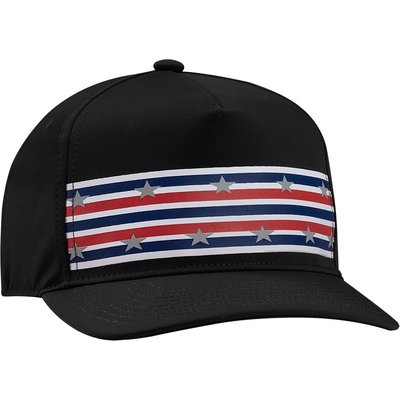
The best USA-themed golf gear for 2026 is Srixon’s Limited Edition All-American Z-Star Diamond golf balls ($54.99 — a real tour ball in a stars-and-stripes box), the Srixon Stars & Stripes hat ($34.99), and a set of American flag headcovers ($21.99). For a statement piece, TRUE linkswear’s All Day Ripstop V2 in the Patriot colorway ($149) is the best patriotic golf shoe of 2026, and Cleveland’s All-American RTZ wedge ($189.99) is the rare flag-themed item that actually lowers scores.
Every July the golf course turns red, white, and blue — and every July, half the patriotic gear sold is junk that gets worn once. We picked the 10 USA-themed items below the same way we pick everything at T5 Golf: stuff that performs, holds up, and stays in the bag after the holiday weekend. This year the list got a real upgrade — Srixon and Cleveland both shipped Limited Edition All-American collections, and TRUE linkswear dropped a Patriot colorway of our favorite walking shoe. Prices are current as of June 2026.
The best patriotic golf ball of 2026, full stop. This is the same tour-played Z-Star Diamond — urethane cover, 338-dimple pattern — in a Limited Edition All-American box with stars-and-stripes side stamps. Unlike novelty flag balls, you give up nothing in performance.
2. TRUE linkswear All Day Ripstop V2 — Patriot ($149)
The best USA-themed golf shoe of 2026. TRUE’s All Day Ripstop is our favorite walk-everything shoe, and the Patriot colorway does red-white-navy with restraint — you can wear it off the course without looking like a costume. Most sizes in stock as of this writing.
The rare patriotic item that actually improves your scoring clubs. Cleveland’s RTZ is a legit tour wedge — this Limited Edition All-American version (56°, mid grind) adds the flag treatment to the cavity. Same spin, more freedom.
4. Srixon Limited Edition USA Stars & Stripes Hat ($34.99)
The single most-worn patriotic item on any course in July. Structured performance crown, subtle stars-and-stripes panel treatment — works with any outfit and survives sweat, sunscreen, and the beer cooler. Budget alternative: this washed-cotton USA flag bucket hat (~$22) on Amazon.
Skip the full flag-print costume look. The 4.7-star moisture-wicking flag polo below has a subtle print that reads red-white-navy sportswear, not Halloween. Performance fabric only — cotton flag polos die in one summer.
6. American Flag Headcovers — Driver/Wood/Hybrid ($21.99)
The highest visibility-per-dollar item in the bag, and this 4.8-star flag set fits modern 460cc heads. Premium option: the Srixon Limited Edition USA Headcover Set ($79.99) matches the rest of the All-American collection.
7. Callaway Chrome Soft 24 USA TruTrack Golf Balls ($54.99)
If you play Callaway, this is your USA ball: the actual Chrome Soft with red-white-blue TruTrack alignment graphics. The TruTrack triple-line doubles as a putting alignment aid — patriotic and functional.
AAA Cabretta leather with a red-white-blue “rocket pop” popsicle design on the back — the most fun glove in the patriotic category. Gloves are consumables; at this price grab two, because white panels show wear fast.
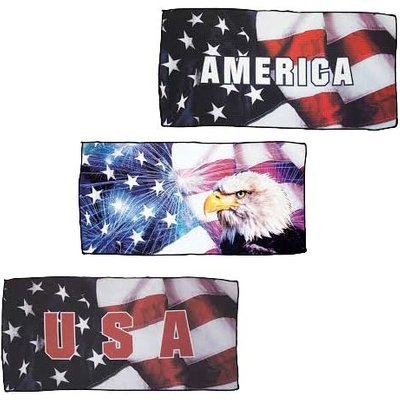
9. Devant USA Flag Microfiber Towel ($19.95) + CHAMPKEY USA Putter Grip ($15.29)
The classic playing-partner gift tier. The hi-def flag towel clips on and looks sharp; pair it with the 4.7-star CHAMPKEY USA pistol putter grip — fresh grips are the cheapest performance upgrade in golf, and this one flies the flag year-round.
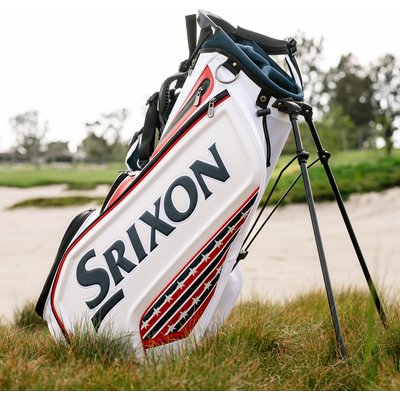
10. Srixon Limited Edition USA Stand Bag ($299.99)
The flag-bearer of the All-American collection. Full stars-and-stripes treatment on a legit lightweight stand bag — this is the piece the whole foursome notices on the first tee. Limited run; when it’s gone, it’s gone.
Bonus: Puma Volition America Collection (apparel, $30–$120)
If you want the full patriotic fit done by a major brand, Puma’s Volition America line is the gold standard — polos, hats, and bottoms in genuinely wearable red-white-navy designs, and a portion of proceeds supports Folds of Honor scholarships for families of fallen and disabled service members. Patriotic gear that gives back is an easy yes.
Don’t hint — send the list. The free T5 Golf Wish List builder lets you tap the gear you actually want (90 products, 41 brands), then text one link to whoever’s buying. Every item links straight to Amazon. No login, 60 seconds.
New wedge or new grips can change your miss pattern more than you’d think. Hit 20 shots before and after any equipment change and let the data tell you what actually moved. Start tracking your golf data in 60 seconds →
Frequently Asked Questions
What is the best USA-themed golf gift under $50?
Srixon’s Limited Edition Stars & Stripes hat ($34.99) or the American flag headcover set ($21.99). Both get used every round, not just on July 4th.
Do patriotic golf balls perform the same as regular ones?
The Srixon All-American Z-Star Diamond and Callaway Chrome Soft USA TruTrack are the identical tour balls with patriotic graphics — zero performance difference. Novelty flag balls from unknown brands are a different (worse) ball.
When should I order USA golf gear for July 4th?
Order by June 27–28 for standard shipping. The Srixon All-American collection and TRUE Patriot colorway are limited runs that sell out before the holiday most years.
Is USA-themed golf gear only worth wearing once a year?
The hat, glove, putter grip, headcovers, and the TRUE Patriot shoes all read as red-white-navy sportswear year-round. The full flag polo is the only really holiday-specific item.
The Oakley Flak 2.0 XL with a Prizm Golf lens is the best golf sunglass for most players — the Prizm Golf tint boosts the contrast between the ball and the turf, so you actually track the ball better. Want the same effect for a third of the price? The Tifosi Rivet with an Enliven Golf lens is the value pick. And note: most golfers should avoid polarized lenses (see below).
Disclosure: T5 Golf is reader-supported. Links below are affiliate links — if you buy through them we may earn a commission at no extra cost to you. It never changes our rankings.
TL;DR: The Oakley Flak 2.0 XL with Prizm Golf lens is the best overall golf sunglasses in 2026 — unmatched lens clarity, durable frame, and the Prizm Golf tint enhances green contours better than anything else at this price. The Tifosi Rivet with Enliven Golf lens is the best value pick at under $80. For premium polarized performance, the Maui Jim MauiPure lenses deliver the sharpest optics money can buy.
Why Golf-Specific Sunglasses Matter
Most golfers either play without sunglasses or wear whatever pair they grabbed off the kitchen counter. Both approaches cost you strokes. Generic sunglasses flatten depth perception and wash out the subtle contours on greens that tell you where your putt will break. Golf-specific lenses are engineered to enhance green and brown tones — the exact colors that define fairway undulation, green slopes, and bunker edges.
The right pair of golf sunglasses does three things: protects your eyes from UV fatigue that affects focus over 4-5 hours, enhances your ability to read greens and judge distance, and stays comfortable and secure through a full round of swings. This guide ranks every major option by what matters on the course.
The Flak 2.0 XL has been the benchmark for golf sunglasses for years, and the 2026 version with Prizm Golf lens technology remains the one to beat. Prizm Golf is specifically tuned to enhance the contrast between green tones, making subtle breaks on the putting surface visible from farther away. The semi-rimless design provides an unobstructed lower view — critical for seeing the ball clearly at address.
The O-Matter frame is virtually indestructible, weighs next to nothing, and the Unobtainium nose pads grip tighter when you sweat instead of sliding down your face. If you have never played with golf-specific sunglasses before, this is the pair that will convince you they make a real difference.
Who should buy: Any golfer who wants the best combination of lens performance, durability, and fit. The clear category leader.
The Tifosi Rivet punches far above its price. The Enliven Golf lens enhances green contours and textures with a clarity that rivals lenses costing three times as much. Multiple reviewers call the green-reading enhancement “uncanny” at this price point. The frame is lightweight, flexible, and comes with a lifetime warranty against defects.
The main tradeoff versus the Oakley is optical clarity in the periphery and the lack of a polarized option. But if you are trying golf sunglasses for the first time or want a dedicated pair for the course without spending $200, the Rivet delivers 90% of the performance at 35% of the price.
Who should buy: Budget-conscious golfers and anyone who wants to try golf-specific lenses without a big commitment. Best value in the category by a wide margin.
Maui Jim makes the sharpest polarized lenses in the sunglasses industry, period. The PolarizedPlus2 technology eliminates glare while boosting color and contrast in a way that makes the course look almost surreal. Water hazards become transparent, fairway undulations pop, and green contours are visible from 30+ yards out.
The premium price is justified if optical clarity is your top priority. These are also the best sunglasses on this list for all-day comfort — the lenses reduce eye strain significantly over a 4-5 hour round. If you play 3+ times per week, the investment pays for itself in reduced fatigue and better course reads.
Who should buy: Serious golfers who play frequently and want the absolute best optics. Also excellent for golfers with light-sensitive eyes.
If the Flak 2.0 XL look is too sporty for your taste, the Sutro Lite offers the same Prizm lens technology in a more lifestyle-oriented frame. The shield-style lens provides an ultra-wide field of view with zero frame obstruction, and the reduced weight makes it comfortable for extended wear.
The Sutro Lite also transitions better from the course to the clubhouse to the car. If you want one pair of sunglasses that performs on the course and looks good everywhere else, this is the pick.
Who should buy: Style-conscious golfers who want Prizm Golf lens performance in a frame they will actually wear off the course.
Costa lenses are built for intense sunlight. If you play in Florida, Arizona, or anywhere with relentless sun and glare, the Whitetip Pro’s 580G glass lenses provide the best scratch resistance and clarity in bright conditions. The copper-tinted Green Mirror option is specifically tuned for turf sports and enhances green contrast beautifully.
The frame is heavier than the Oakley options, which is the main tradeoff. But the lens quality in high-glare environments is unmatched at this price. Costa also includes a lifetime warranty and excellent customer service.
Who should buy: Golfers who play in bright, sunny conditions year-round. The glass lenses are more scratch-resistant than polycarbonate alternatives, making them the best choice for daily use.
Polarized vs. Non-Polarized for Golf: The Real Answer
This debate has more opinions than a clubhouse bar. Here is what the data says: polarized lenses reduce glare from water hazards, wet grass, and cart paths, which reduces eye fatigue over a full round. Some golfers claim polarized lenses make it harder to read greens because they reduce the visual texture that reveals slopes. In testing, this effect is minimal with high-quality polarized lenses like Maui Jim and Costa, but noticeable with cheap polarized options.
The practical recommendation: if you play in bright conditions regularly, polarized is worth it for fatigue reduction alone. If you play mostly in overcast or variable conditions, non-polarized golf-specific tints like Prizm Golf or Enliven Golf give you better contrast enhancement. If you can only buy one pair, go with the Oakley Flak 2.0 XL in Prizm Golf (non-polarized) for the most versatile option.
What to Look for in Golf Sunglasses
Lens tint matters most. Golf-specific tints (rose, copper, amber) enhance green and brown tones that generic gray lenses wash out. This is not marketing — the difference in green-reading ability is significant.
Frame fit determines comfort. You need a frame that does not bounce during your swing, does not slide when you sweat, and does not obstruct your lower peripheral vision at address. Semi-rimless designs like the Flak 2.0 XL solve the last problem best.
Weight affects fatigue. Anything over 30 grams will start to feel heavy after 3-4 hours. Every pair on this list weighs under 30 grams except the Costa glass lens option.
UV protection is non-negotiable. Every pair on this list provides 100% UV protection. Do not buy golf sunglasses that do not explicitly state UV400 or 100% UV protection.
Final Recommendation
For most golfers, the Oakley Flak 2.0 XL with Prizm Golf is the right choice. It has the best combination of lens performance, fit, durability, and brand trust. If budget is a concern, the Tifosi Rivet delivers remarkable value at under $80. For golfers who play in intense sun daily, the Costa Whitetip Pro or Maui Jim glass lenses are worth the premium for superior glare management and scratch resistance.
Stop squinting at your putts. A good pair of golf sunglasses is one of the cheapest performance upgrades you can make — and unlike a new driver, it works on every single shot.
Gear helps. Data helps more. T5 tracks your carry distances, gapping and dispersion free — so you spend on the thing that actually fixes your scores.
TL;DR: The Callaway Elyte is the best hybrid for most golfers in 2026 — highest launch, most forgiving, and easy to hit from any lie. The Titleist GT2 wins on versatility and feel. The Ping G440 is the consistency king for mid-handicappers who want reliability over raw distance. The TaylorMade Qi35 Max delivers the best combination of speed and carry for players with moderate swing speeds.
Why Your Hybrid Choice Matters More Than Your Driver
Most golfers obsess over their driver and ignore the club they actually hit more often on par 4s and par 5s. Your hybrid is the club that replaces your hardest-to-hit long irons. It is the club you reach for on 200-yard approach shots, tight fairway lies, and recovery shots from the rough. If your hybrid does not inspire confidence, you are leaving strokes on the course every single round.
The 2026 hybrid market is the strongest it has ever been. AI-designed faces, precision tungsten weighting, and adjustable hosel systems mean you can find a hybrid that fits your exact swing profile. But that also means more choices and more confusion. This guide cuts through the marketing and ranks every major hybrid by what actually matters: forgiveness on mishits, carry distance consistency, launch characteristics, and who should buy each one.
Best Golf Hybrids 2026: The Rankings
1. Callaway Elyte Hybrid — Best Overall
Price: $269 – $319 | Lofts: 18°, 20°, 23°, 26° | Best for: 10-25 handicap golfers who want maximum forgiveness
The Callaway Elyte took top marks for both height and forgiveness in independent testing this year. The AI 10x Face technology optimizes variable thickness across hundreds of impact points, which means your heel and toe strikes still carry within 5-8 yards of a center hit. That kind of consistency is what separates a hybrid you trust from one that sits in your bag untouched.
The 24-gram floating tungsten bridge sits low in the sole, pushing the center of gravity down and forward. The result is a high, penetrating ball flight that holds its line even in wind. If you struggle to get your current hybrid airborne from tight lies, the Elyte solves that problem immediately.
Who should buy it: Mid-to-high handicap golfers who want a hybrid they can hit from any lie without thinking about it. If you replaced your 3-iron or 4-iron and want a club that just works, this is it.
Price: $329 | Lofts: 18°, 21°, 24° | Best for: 5-20 handicap golfers who want to shape shots
The Titleist GT2 is the hybrid for golfers who want more than just “hit it high and straight.” The adjustable SureFit hosel gives you 16 independent loft and lie settings, so you can dial in the exact trajectory you need. The feel at impact is pure — a soft, solid compression that gives you immediate feedback on strike quality.
Where the GT2 really stands out is versatility. It performs equally well off the tee, from the fairway, and from light rough. The slightly more compact head shape compared to game-improvement hybrids gives better players the confidence to work the ball without sacrificing the forgiveness that makes hybrids valuable in the first place.
Who should buy it: Single-digit to mid-handicap players who want a hybrid that can do everything. If you want to hit draws, fades, and punch shots with the same club, the GT2 delivers.
Price: $319 | Lofts: 17°, 19°, 22°, 25°, 28°, 31° | Best for: 8-20 handicap golfers who value reliability
The Ping G440 does not win any single category outright. It is not the longest, the highest launching, or the most adjustable. What it does better than anything else is absorb your mistakes. Heel strikes, toe strikes, thin contact — the G440 minimizes the damage and keeps the ball in play. Over 18 holes, that consistency compounds into lower scores faster than any distance gain ever could.
Ping also offers the widest loft range of any hybrid on the market. Six options from 17° to 31° means you can build your entire long game around G440 hybrids if you want. The 28° and 31° options are particularly interesting for seniors or slower-swing-speed players who struggle with mid-irons.
Who should buy it: Mid-handicap golfers who struggle with 4-iron and 5-iron distances. If you want the ball to go roughly where you aim it every time, the G440 is the safest choice.
Price: $249 – $299 | Lofts: 19°, 22°, 25°, 28° | Best for: Golfers who want maximum carry distance from their hybrid
If raw distance is your priority, the Qi35 Max wins. Independent testing showed ball speeds of 148+ mph with club head speeds around 105 mph, translating to carry distances pushing 245 yards in the 3-hybrid configuration. The Twist Face technology corrects off-center hits by adjusting the face angle at the point of impact, adding forgiveness without sacrificing speed.
The price point is also the most competitive in the top tier. At $249-$299 depending on configuration, it undercuts the Titleist GT2 by $30-80 while delivering comparable or better distance numbers. If you are replacing a fairway wood with a hybrid for better control without losing carry, the Qi35 Max is the play.
Who should buy it: Distance-hungry golfers who want the most carry from their hybrid. Also excellent value for players who want tour-level tech without tour-level pricing.
Price: $249 – $299 | Lofts: 19°, 22°, 25° | Best for: Low-to-mid handicap players who want to fine-tune their setup
The Cobra Optm with FutureFit33 adjustability is the most tunable hybrid on the market. Thirty-three different settings let you adjust loft, lie, and face angle to match your exact delivery. If you are the type of golfer who gets fitted and wants the ability to tweak settings between rounds or as your swing changes, this is the hybrid built for you.
Performance wise, the Optm sits in the middle of the pack — solid distance, good forgiveness, clean turf interaction. It does not dominate any single metric, but the adjustability means you can optimize it for your specific needs in a way that other hybrids cannot match.
Who should buy it: Data-driven golfers and tinkerers who want control over every variable. Also a great choice if you work with a fitter and want a hybrid that can evolve with your game.
6. Callaway Quantum Max OS Hybrid — Best for High Handicappers
Price: $229 – $269 | Lofts: 19°, 22°, 25°, 28° | Best for: 20+ handicap golfers and beginners
The Quantum Max OS is the most forgiving hybrid you can buy in 2026. The oversized head, ultra-low CG, and AI-designed face combine to produce high, straight ball flights even on significant mishits. If you are a beginner or high handicapper who finds hybrids hard to hit, this is the one that will change your mind about the category.
It also has the most accessible price point among Callaway’s 2026 lineup. For golfers who want to replace their 5-iron and 6-iron with something they can actually get airborne consistently, the Quantum Max OS is the fastest path to better long-game scores.
Who should buy it: Beginners and high handicappers who need maximum help getting the ball in the air. Also great for seniors who have lost swing speed and need a higher-launching option.
Choosing a hybrid comes down to three questions: what is your handicap, what club are you replacing, and what is your priority — distance, forgiveness, or versatility?
If you are a 20+ handicap: Get the Callaway Quantum Max OS or the Callaway Elyte. You need forgiveness above everything else. Do not overthink this.
If you are a 10-20 handicap: The Callaway Elyte or Ping G440 are your best options. The Elyte gives you more launch height, while the G440 gives you tighter dispersion. Pick based on whether you struggle more with getting the ball up or keeping it straight.
If you are a single-digit handicap: The Titleist GT2 or Cobra Optm give you the workability and adjustability that better players want. The GT2 has better feel, the Optm has more adjustment options.
If you want the most distance: The TaylorMade Qi35 Max produces the highest ball speeds in the category. It is also the best value among the premium options.
Hybrid vs. Long Iron vs. Fairway Wood: When to Switch
The decision to carry a hybrid instead of a long iron or fairway wood depends on your consistency, not your ego. Here is the data-driven framework:
Replace your long iron with a hybrid if: Your dispersion pattern with a 3-iron or 4-iron is wider than 40 yards left-to-right. Most amateurs have dispersion of 50+ yards with long irons but only 25-35 yards with a hybrid. That is a massive scoring difference.
Replace your fairway wood with a hybrid if: You struggle with fairway wood contact from the fairway (not the tee). Hybrids sit lower to the ground, have shorter shafts, and produce more consistent contact from tight lies. You may lose 10-15 yards of carry but gain dramatically in hit rate and accuracy.
Keep your current setup if: Your long iron or fairway wood dispersion is already tight and you hit it solidly more than 60% of the time. In that case, the yardage advantage of the longer club outweighs the forgiveness advantage of a hybrid.
The Hybrid Shortlist
Every hybrid ranked above, with current Amazon pricing.
For most golfers reading this, the Callaway Elyte is the right hybrid. It is the most forgiving option in the premium tier, it launches high enough to hold greens from 200+ yards, and it performs consistently from every lie type. If you can only buy one hybrid this year, make it the Elyte.
For better players who want more control, the Titleist GT2 is the play. For budget-conscious golfers who still want top-tier performance, the TaylorMade Qi35 Max delivers the best value in the category.
Whatever you choose, the most important thing is this: if you are carrying a 3-iron or 4-iron that you do not hit consistently, replace it with a hybrid today. The data is clear — tighter dispersion from your long game is the fastest path to lower scores.
TL;DR — Buy a laser rangefinder if you want the most accurate distance to the pin, fast flag acquisition, and plan to play competitively. Buy a GPS watch if you want hands-free yardages, hazard distances, and course mapping without lifting a device. Serious golfers increasingly use both. If you want one device that does both reasonably well, the Bushnell Tour Hybrid is the best crossover option.
The Real Difference
Laser rangefinders and GPS watches solve different problems. A rangefinder tells you exactly how far it is to the flag — or any specific target you point it at — with pinpoint precision. A GPS watch tells you front, middle, and back of the green at a glance from your wrist, plus hazard distances, shot tracking, and course flyover data.
Neither is strictly better. They’re different tools, and the right one depends on how you play and what you value on the course.
Head-to-Head Comparison
Factor
Laser Rangefinder
GPS Watch
Distance accuracy
±1 yard to flag
±2–3 yards to center
Speed of use
3–5 seconds to lock on
Instant — glance at wrist
Hazard distances
Manual aim required
Pre-mapped, automatic
Course mapping
None
Full hole layout
Shot tracking
None
Most premium models
Slope adjustment
Many models (toggle off for tournaments)
Some models
Tournament legal
Yes (non-slope mode)
Yes
Battery life
Months on a battery
1–5 days typical
Price range
$100–$600
$150–$700
When a Laser Rangefinder Is the Right Choice
A laser rangefinder is the better tool if any of these apply to you:
You play competitively or in tournaments. Laser rangefinders (non-slope mode) are permitted by the USGA for most stroke play and match play formats where distance-measuring devices are allowed. If you’re playing handicap rounds or club competitions, a rangefinder gives you exact pin distance without relying on GPS accuracy.
Pin position matters to you. A GPS watch gives you the center of the green. A laser tells you exactly where the flag is, accounting for pin position that can vary by 15–20 yards from the center. On a tight approach where carry distance matters, that difference is the difference between pin high and long or short.
You want to measure specific targets. Need the distance to a bunker? The tree line? The front of the water hazard? Point the laser and know in seconds. GPS watches pre-map hazards, but can’t give you live, custom measurements to arbitrary targets.
Battery longevity matters. Most laser rangefinders run on standard batteries that last for months or years. GPS watches need charging every 1–5 days depending on the model and GPS usage.
When a GPS Watch Is the Right Choice
You want hands-free, constant yardage. Walking to your ball and glancing at your wrist is faster than pulling out and aiming a rangefinder. For casual rounds and faster play, GPS watches reduce friction. The distance is always visible without reaching into your pocket.
You want hazard mapping. GPS watches display mapped distances to bunkers, water hazards, doglegs, and layup zones — all pre-programmed from course data. You don’t have to identify and aim at each hazard individually. You see the whole picture.
You want shot tracking. Premium GPS watches like the Garmin Approach S70, Shot Scope V5, and Bushnell iON Elite include automatic shot detection that logs every shot, builds stat profiles, and tracks scoring patterns over time. This is T5-level analytics on your wrist without additional hardware.
You want a smartwatch too. The Garmin Approach S70 and similar models function as full smartwatches: notifications, health tracking, sleep data. If you want a single wearable that replaces your everyday watch and your golf tech, a GPS watch delivers.
Best Laser Rangefinders in 2026
Best Overall: Bushnell Tour V6 (~$179) The Tour V6 is the most widely used rangefinder on the PGA Tour at this price point. ±1 yard accuracy, 6x magnification, fast flag-lock, and tournament legal. The best value in the category.
Best with Slope: Bushnell Pro X3 (~$400) Adds Bite Magnetic mount, dual display, and slope-adjusted distances. For golfers who want slope data for practice rounds and non-tournament play. See our Bushnell Pro X3 vs Garmin Approach Z30 comparison.
Best Under $200 with Slope: Precision Pro NX10 (~$169) Slope-compensated distance, fast acquisition, and a one-year battery. Strong value below the Bushnell price point.
Best Overall: Garmin Approach S70 (~$499) AMOLED display, Virtual Caddie club suggestions, 43,000+ courses, full smartwatch features, and optional shot tracking. The benchmark for premium GPS golf watches. Read our full S70 review.
Best Under $300: Garmin Approach S42 (~$249) Full golf functionality, color touchscreen, 42,000+ courses, Garmin ecosystem integration. The best balance of features and price in the category. See the full under-$300 rankings.
Best for Shot Tracking: Shot Scope V5 (~$199) Automatic shot detection, 14-club tracking, 40,000+ courses, and an exceptional stats app. Best choice for golfers who prioritize data over display quality.
The Bushnell Tour Hybrid combines a laser rangefinder with a built-in GPS display showing front/middle/back yardages. You get pinpoint flag distance via laser and automatic green distances on a small screen without lifting the device to your eye. It’s not perfect — the GPS feature set is more limited than a dedicated watch, and it’s larger than a standalone rangefinder — but it’s the best one-device solution if you don’t want to carry two pieces of tech.
The Garmin Approach Z30 takes a different angle: it’s a rangefinder with a digital display overlay showing yardage directly on your view through the scope. Cleaner experience, premium price (~$599).
The Serious Golfer Setup: Use Both
Many scratch-to-10 handicap golfers carry both. The GPS watch stays on the wrist for constant green distances and hazard awareness. The laser comes out only for flag acquisition on critical approach shots. Total investment: ~$180 (Bushnell Tour V6) + ~$249 (Garmin S42) = $429 for a complete distance tech setup.
That’s a legitimate case. The data types don’t overlap perfectly — they complement each other. If you’re playing serious recreational golf, you’re playing at a level where an extra 3–5 yards of pin accuracy materially affects shot selection and scoring.
Rangefinder or GPS Watch: The Shortlist
Once you know which side of the line you fall on, here are the proven picks from each path — laser rangefinders first, then GPS watches, plus the one-device hybrid. Current Amazon pricing below.
Choose a laser rangefinder for tournament play, pinpoint accuracy, and targeted measurements. Choose a GPS watch for course awareness, shot tracking, and hands-free convenience. The best setup for most serious golfers is both — and the combined cost is well within reach of a single round’s green fees at a premium course.
If budget requires choosing one: if you play competitively, buy the laser. If you play for fun and want more data, buy the GPS watch.
T5 Golf earns a commission on purchases made through links in this article at no additional cost to you. Recommendations are based on independent evaluation criteria.
TL;DR — The Callaway Elyte wins on forgiveness (9.1/10 vs. 7.8/10) and is the better choice for mid-to-high handicappers who miss off-center frequently. The TaylorMade Qi35 edges it on raw distance by ~2 yards and rewards more consistent ball strikers. Both retail around $599. The right answer depends on your handicap and miss pattern — not marketing.
Quick Comparison
Metric
Callaway Elyte
TaylorMade Qi35
Ball Speed (avg)
165.3 mph
163.0 mph
Total Distance (avg)
248.85 yards
250.07 yards
Forgiveness Score
9.1/10 (#7 overall)
7.8/10 (#32 overall)
Offline (accuracy)
12.8 yards avg
7.0 yards avg (heavier weight)
Price
~$599
~$599
Technology
The Callaway Elyte uses Callaway’s latest AI-designed face — the same AI optimization process that produced the Paradym and Elyte Triple Diamond lines. The result is a face that generates high ball speed even on heel and toe strikes, which is exactly why the forgiveness numbers are so strong. The Elyte’s center of gravity sits low and back, promoting high launch with low spin for most swing profiles.
The TaylorMade Qi35 builds on the Qi10 platform with updated aerodynamics and a new face geometry designed to maximize ball speed at center contact. It’s a driver that rewards good swings — and the data confirms it. On pure strikes, the Qi35 produces slightly more ball speed than the Elyte. On off-center hits, the gap widens in the Elyte’s favor.
Distance: Who Wins?
On paper, the Qi35 carries farther by about 1.2 yards on average. In testing, the Callaway Elyte averaged 165.3 mph ball speed (117.3 mph club head speed) versus 163.0 mph ball speed (116.0 mph club head speed) for the Qi35.
The distance edge is marginal. More importantly, the Elyte’s higher ball speed on off-center strikes means real-world distance for average golfers likely tilts toward the Elyte — because most amateurs don’t hit the center of the face consistently.
Forgiveness: Not Even Close
This is the clearest data point in the comparison. MyGolfSpy’s independent testing ranks the Callaway Elyte 7th overall in forgiveness out of all 2026 drivers tested. The TaylorMade Qi35 finished 32nd. That’s not a marginal difference — that’s a different category of club.
If you’re a 15+ handicap or you know your ball-striking is inconsistent, the Elyte will protect you from bad misses more effectively than any other driver at this price point.
Accuracy
Accuracy is where the Qi35 surprises. In the heavier weight configuration (which moves the CG forward for tighter dispersion), the Qi35 averaged just 7 yards offline — versus 12.8 yards for the Elyte. The trade-off is reduced forgiveness on off-center strikes.
Golfers who strike it in the center consistently will find the Qi35 more accurate. Golfers who miss frequently will find the Elyte keeps more balls in play despite the wider dispersion on center hits.
Who Should Buy the Callaway Elyte?
The Elyte is the right pick if: you’re a 10–25 handicap, your ball-striking is inconsistent, you want maximum forgiveness without sacrificing distance, or you’re coming from an older forgiving driver and want a direct upgrade. It’s also the top pick for golfers who need a high launch angle.
Who Should Buy the TaylorMade Qi35?
The Qi35 is the right pick if: you’re a 0–10 handicap, your center contact rate is high, you’re chasing maximum distance on pure strikes, or you play a fade-biased shot and want the adjustability to dial it in. Low-spin players will also prefer the Qi35 LS variant.
Disclosure: T5 Golf earns from qualifying purchases through affiliate links, including Amazon Associates and partner programs, at no extra cost to you.
Bottom Line
Get fit before you decide. At identical price points, the choice between the Callaway Elyte and TaylorMade Qi35 comes down to one question: do you miss the center of the face more than twice per round? If yes, take the Elyte and don’t look back. If you’re a consistent ball-striker looking for maximum performance on pure shots, the Qi35 rewards you.
Either way, you’re getting one of the best drivers available in 2026. The difference is in how each club handles your worst swings.
Disclosure: T5 Golf may earn a commission when you purchase through links on this page. This does not affect our rankings or recommendations. We only recommend products we believe deliver real value.
Don’t buy the tour player’s clubs. Buy the tour player’s logic. The lesson from the 2026 Masters bags isn’t “get a Krank driver” — it’s that the world No. 1 still plays last year’s driver, that ball choice is a real performance variable, and that wedges win Augusta. The amateur versions of those decisions: a current-but-not-brand-new driver, a premium urethane ball, and properly gapped wedges.
Disclosure: T5 Golf is reader-supported. Links below are affiliate links — if you buy through them we may earn a commission at no extra cost to you. It never changes our rankings.
TL;DR — The 2026 Masters field is stacked with the best players in the world using the best equipment money can buy. Scheffler is on the TaylorMade Qi10/P-7TW combo. McIlroy switched to the new Qi4D driver and P7CB irons. DeChambeau is playing a Krank driver and prototype Avoda irons. Here’s what it all means — and what you should actually buy if you’re inspired to upgrade your game this Masters week.
The Masters Tournament — the 90th edition — runs April 9–12, 2026 at Augusta National Golf Club. Scottie Scheffler is the +500 favorite. Reigning champion Rory McIlroy is +1100. Bryson DeChambeau checks in at +1000. The field is elite, the stakes are enormous, and every bag on the tee has been dialed to obsessive detail.
For the data-driven golfer, Masters week is more than a TV event. It’s a live equipment laboratory. Here’s the full breakdown of what’s in the bags of the three biggest names — plus the honest answer to which pieces of their gear are worth pursuing for your own game.
Scottie Scheffler’s Bag: World No. 1, Augusta Specialist
Scheffler is a two-time Masters champion and the most consistent performer in professional golf over the last three years. His equipment choices are deliberately conservative — proven, dialed, and designed for repeatability over experimentation.
Club
Make / Model
Specs
Driver
TaylorMade Qi10 (returned to after testing Qi4D)
8.25°, Fujikura Ventus Black 7X
3-Wood
TaylorMade Qi10
15°, Fujikura Ventus Black 8X
7-Wood
TaylorMade Qi4D (custom)
Custom built prototype
4-Iron
Srixon ZU85
Nippon N.S. Pro Modus 3 Hybrid X
5-PW
TaylorMade P-7TW
True Temper Dynamic Gold Tour Issue X100
Wedges
Titleist Vokey SM8 (50°, 56°), SM9 Tour (60°)
Dynamic Gold Tour Issue S400
Putter
TaylorMade Spider Tour X L-Neck
3° loft, 72° lie, Golf Pride Pistol grip
Ball
Titleist Pro V1
—
What This Means for Your Game
Scheffler’s choice to return to the Qi10 driver after testing the newer Qi4D is meaningful. It tells you that for a player with his ball-striking ability, the performance gains from the new model weren’t worth the adjustment period. For amateurs, the lesson is identical: the best driver isn’t always the newest driver. If you’ve been gaming a Qi10 or a similar 2024–2025 model and it fits you well, there’s no urgent reason to upgrade.
The Vokey wedge selection is worth noting. SM8 at 50° and 56°, SM9 Tour at 60°. That split tells you Scheffler still trusts the SM8’s versatility for mid-range distances while leaning on the SM9’s tighter tolerances for his lob wedge. If you’re in the market for a new wedge, the Vokey SM10 (the current consumer model) carries those same spin and groove characteristics.
Rory McIlroy’s Bag: Defending Champion, New Gear
McIlroy comes to Augusta as the defending champion and is playing some of the most technically upgraded equipment of any player on tour. He made a headline-grabbing switch to the TaylorMade Qi4D driver — a model built around a new eight-inch face roll and tighter spin tolerances — and has been experimenting with his iron setup throughout the early 2026 season.
Club
Make / Model
Specs
Driver
TaylorMade Qi4D
9°, Fujikura Ventus Black 6X
3-Wood
TaylorMade Qi4D
15°, Fujikura Ventus Black 8X
5-Wood
TaylorMade Qi4D
18°, Fujikura Ventus Black 9X
4-Iron
TaylorMade P760
Project X 7.0
5-PW
TaylorMade P7CB / Rors Proto (fluctuates)
Project X Rifle 7.0, D4.5 swing weight
Ball
TaylorMade TP5
Switched from TP5x in 2025; kept through Masters win
What This Means for Your Game
McIlroy’s move to the TaylorMade TP5 ball (from the TP5x) is the most actionable takeaway from his bag. He made the switch before his 2025 Masters win and kept it through the season — meaning the softer compression and slightly lower spin of the TP5 worked better for his overall game, including his short game around Augusta’s greens.
For mid-to-high swing speed amateurs (95–110 mph), the TP5 vs TP5x question is worth examining. The TP5x is firmer and launches higher. The TP5 is softer with better greenside spin control. If your miss is high and balloon-y off the driver, TP5 likely suits you better. If you lose distance from too-low ball flight, TP5x may be the call.
Bryson DeChambeau’s Bag: The Mad Scientist Goes Independent
DeChambeau is the most unconventional bag in the field. After years with Cobra, he’s now playing a Krank Golf Formula Fire LD driver — a distance-specialist brand largely unknown outside long drive competition — along with prototype Avoda irons that are built to his single-length specification with curved faces.
Club
Make / Model
Specs
Driver
Krank Formula Fire LD
6°, built for maximum distance
Irons
Avoda Origin Curved Face (prototype, 3-PW)
Single-length, LA Golf Bad Prototype shafts
Wedges
Changed to prototype wedges (LIV Singapore 2026)
Ongoing refinement
What This Means for Your Game
Nothing in Bryson’s bag is for you — and that’s actually the point. His equipment is so bespoke and experiment-driven that it doesn’t translate to the amateur market. The Krank driver isn’t commercially available in a meaningful way. The Avoda irons are prototypes. The single-length iron concept has been on the market (OneLength by Cobra) and the data shows it helps some golfers with consistency but doesn’t magically add distance.
The real takeaway from Bryson’s bag is a lesson in optimization: he has the resources to test literally anything, and what he’s landed on is still evolving. The lesson for amateurs isn’t to copy his setup — it’s to keep testing and refining your own.
The Masters Equipment Intelligence: 3 Takeaways for Amateur Golfers
1. The Best Player in the World Still Plays Last Year’s Driver
Scheffler returned to the Qi10 after testing the Qi4D. This is the best reminder in golf: fit beats newness every time. A driver that matches your swing speed, attack angle, and spin profile will outperform a brand-new model that doesn’t suit you. If you’re in the market for a driver upgrade, start with a fitting before a purchase. Our Best Golf Drivers 2026 ranking includes a full breakdown by swing speed and handicap.
2. Ball Selection Is a Real Performance Variable
McIlroy changed his ball and won the Masters. That’s not causation, but it is correlation worth studying. If you’ve been playing the same ball for years without testing alternatives, you may be leaving performance on the table. Our guide on how to choose the right golf ball walks through compression, cover type, and what actually matters at your swing speed.
3. Wedge Mastery Wins Augusta — and Every Other Course
Augusta National’s undulating greens demand elite wedge control. Every player in the field is meticulous about their wedge gapping and grind selection. For amateurs, wedge performance is often the biggest ROI upgrade available. A well-fit set of three wedges (typically 50°, 56°, 60°) with appropriate bounce and grind for your turf conditions will do more for your scores than almost any other equipment change. See our Best Wedges 2026 rankings for the full breakdown.
The 2026 Masters: Odds, Favorites, and Who to Watch
For those following the tournament closely, here’s the current odds picture heading into the week:
Player
Odds (FanDuel)
Notes
Scottie Scheffler
+500
Two-time Masters champ, world No. 1, slight rust after withdrawals
Bryson DeChambeau
+1000
Trending up; Augusta course sets up for bombers
Jon Rahm
+1000
Augusta specialist, strong recent form
Rory McIlroy
+1100
Defending champion, back injury concern after Arnold Palmer WD
Xander Schauffele
+1500
Consistent contender, no major red flags
Ludvig Åberg
+1600
Young gun with elite ball-striking, Augusta could suit him
Tommy Fleetwood
+2200
Strong iron player, could be a live longshot
The tournament runs April 9–12, 2026. Coverage is on CBS, ESPN+, and Masters.com.
Bottom Line
Masters week is the best time of year to think seriously about your equipment — not because you should go buy what Scheffler plays, but because watching the best players in the world exposes the real performance gaps between fit equipment and generic off-the-rack purchases. The pros obsess over every detail. You don’t need to go that far. But a driver fitting, a ball test, and a wedge upgrade are three moves that can genuinely change your scores in 2026.
Enjoy the tournament. Use it as inspiration. And if you want a starting point for your own equipment review, the T5 Golf gear rankings are a good place to begin.
Before you copy a pro’s bag, find out what your bag is actually doing. Most amateurs have two clubs that carry the same distance and a 30-yard gap they’ve never noticed. T5 shows you your real carry distances and gapping — free.
TL;DR: The best premium wedge for most golfers in 2026 is the Titleist Vokey SM10 — six grinds, tour-proven, the standard everyone else gets compared to. If you want maximum spin, the Cleveland RTX 6 ZipCore edges it on raw greenside grab. Mid-handicap? The Cleveland CBX Zipcore gives you cavity-back forgiveness with real wedge feel for under $150. And if you genuinely struggle around the green, the Square Strike Wedge is the only club that stops the dreaded chunk-skull cycle.
This guide breaks down the best golf wedges of 2026 by budget and skill level — so you stop guessing and start getting up-and-down.
How We Picked
We evaluated every major 2026 wedge release on five criteria that actually translate into shots saved:
Spin generation — measured by RPM on partial wedge shots from the rough and fairway
Greenside control — short flop shots, bump-and-runs, pitches that check
Turf interaction — how the sole reacts through different lies and grinds
Forgiveness — heel/toe miss penalties for amateurs (yes, even on a wedge)
Grind options — how many shots can the wedge actually hit?
We weighted spin and turf interaction heaviest. A wedge that can’t grab the green doesn’t save shots — and a wedge that digs on a tight lie causes more bogeys than it saves.
Best Premium Wedges (Tour-Grade)
Best Overall: Titleist Vokey SM10
The Titleist Vokey SM10 is the wedge most tour pros put in the bag — and for good reason. The SM10 builds on Bob Vokey’s 30-year platform with progressive center-of-gravity placement: low CG in the lob wedge for high launch, higher CG in the gap wedge for control. Spin Milled 6.0 grooves are sharper and tighter than any production wedge in golf.
Six grinds (F, S, M, K, L, D) cover every turf condition and swing type. The K grind is the most forgiving for amateurs who slide the club under the ball; the M grind is the tour-favorite for shotmakers.
Bottom line: If you want one wedge that does everything well, the SM10 is it. The benchmark every other wedge gets measured against.
Best for Maximum Spin: Cleveland RTX 6 ZipCore
The Cleveland RTX 6 ZipCore is built around one idea: maximum greenside spin. Cleveland’s UltiZip grooves are 11% deeper and 11% sharper than the previous generation, and the ZipCore low-density core in the hosel raises the MOI without sacrificing feel.
In testing, the RTX 6 generates 200–400 more RPM on full wedge shots than the Vokey SM10. From the rough, that means more checking, less roll-out, more confidence on tight pin positions.
Bottom line: If your weakness is spin off chip and pitch shots — especially out of light rough — the RTX 6 grabs the green better than anything in its price range.
Best for Workability: Callaway Jaws Raw
The Callaway Jaws Raw has a head-turner of a feature: the unplated raw face actually rusts over time, and Callaway claims this increases friction (and spin) as the wedge ages. Marketing or fact, players who use Jaws Raw report exceptional bite on partial shots.
Five sole grinds (S, W, X, Z, T) plus the option of full or mid-toe geometry give shotmakers more configurations than nearly any wedge on the market. The CG is positioned for a slightly higher launch than the SM10 — a benefit for players who hit low, spinny wedges.
Bottom line: Best for the creative shotmaker who wants every option in the bag.
Best for Forgiveness in a Tour Wedge: Ping S159
The Ping S159 is what happens when the company famous for making forgiving irons turns its attention to wedges. The S159 has six grinds (B, S, T, E, H, W) and an emphasis on heel-side relief that makes off-center contact more forgiving than a Vokey or Cleveland.
The HydroPearl 2.0 finish sheds water from the grooves better than chrome, which matters for early-morning rounds and wet conditions. Players who don’t strike the wedge perfectly every time will see fewer “fliers” with the S159.
Bottom line: A tour-grade wedge with above-tour-grade forgiveness. Best for low single-digit handicaps who occasionally miss the center.
Best Mid-Tier Wedges ($100–$150)
Best Player’s Mid-Tier: Mizuno T24
The Mizuno T24 is a forged carbon steel wedge that punches well above its price. Mizuno’s grain-flow forging process — the same one used in their tour-blade irons — gives the T24 a soft, buttery feel that’s closer to a $200 tour wedge than a sub-$150 club.
Three grinds (D, S, X) cover most needs. The Quad Cut grooves are CNC-milled and consistent face-to-face. For players who value feel above all else, the T24 is the sleeper pick of the year.
Bottom line: Tour-wedge feel at mid-tier price. Best if you’ve been an iron player for years and want the same forged-feel in a wedge.
Best Cavity-Back Wedge: Cleveland CBX Zipcore
The Cleveland CBX Zipcore solves a real problem: most wedges are blade-style, but most amateurs play cavity-back irons. The transition from a forgiving 9-iron to an unforgiving wedge causes shanks, thins, and the dreaded “chunk-skull” cycle.
The CBX Zipcore is a true cavity-back wedge with hollow-cavity construction that pulls weight to the heel and toe. Off-center hits don’t twist the face the way they do on a Vokey. You still get UltiZip grooves and ZipCore technology — just with iron-style forgiveness baked in.
Bottom line: If you play cavity-back irons, this is the wedge you should buy. Period.
Best Full-Face Wedge: Cleveland CBX Full Face 2
The Cleveland CBX Full Face 2 is the lob-wedge specialist. Grooves cover the entire face — heel to toe — so high-toe shots, flop shots, and bunker explosions get the same friction as center strikes.
This is the wedge to add to your bag specifically as your 58 or 60 degree. It’s not a daily 50-degree gap wedge; it’s a creativity tool for around the green. Sole grind C is wide enough to skid through bunker sand without digging.
Bottom line: Best dedicated lob wedge for amateurs who want to start trying flop shots and bunker artistry.
Best Game-Improvement Wedge
Best for High Handicaps & Chunkers: Square Strike Wedge
The Square Strike Wedge is unlike anything else on this list — and that’s intentional. It’s a rectangular, putter-faced wedge designed for one purpose: eliminating the chunk-skull cycle for golfers who can’t make consistent contact around the greens.
The wide, flat sole prevents the leading edge from digging. The high MOI head resists twisting on mishits. The shorter shaft promotes a putt-stroke motion. Tour pros laugh at it; 25-handicaps who own one save 4–6 strokes per round.
Bottom line: If chipping is the worst part of your game and traditional wedges terrify you, this works. Don’t let ego stop you from carrying it.
The single biggest mistake amateurs make: not thinking about wedge gapping. If your pitching wedge is 44 degrees and your sand wedge is 56, you have a 12-degree gap with no club to fill it. That’s a 30-yard distance hole in your bag.
Standard 3-wedge setup (most amateurs):
– 50° gap wedge
– 54° sand wedge
– 58° lob wedge
Bounce matters. Higher bounce (12°+) for soft turf, fluffy bunkers, and steep swings. Lower bounce (4–8°) for firm turf, tight lies, and shallow swings. The Vokey K grind, Cleveland RTX 6 mid grind, and Ping S159 S grind are all good “do everything” bounces around 10°.
FAQ
Q: How often should I replace my wedges?
A: Every 75–125 rounds for most amateurs. The grooves wear faster than you think. If your spin numbers have dropped or balls aren’t checking like they used to, your grooves are the culprit.
Q: Are forged wedges actually better than cast?
A: For feel? Yes — most players notice the difference. For performance? Modern cast wedges (like the Cleveland RTX 6) actually generate more spin than many forged options. Pick based on what feels good in your hands.
Q: Do I need different wedges for different conditions?
A: Tour pros do — they swap grinds based on course firmness. For most amateurs, a single setup with versatile grinds (M, S, or K) handles 95% of conditions you’ll see.
Q: Should I buy a 60-degree lob wedge?
A: Only if you’re going to practice with it. The lob wedge is the hardest club in the bag to hit consistently. If your short game is shaky, master your 56° before adding a 60°.
Q: What’s the difference between a wedge “grind” and “bounce”?
A: Bounce is the angle between the leading edge and the lowest point of the sole — it prevents digging. Grind is the shaping of the sole (heel relief, toe relief, trailing edge) that lets you open the face for flop shots without changing the bounce. They work together.
The Wedge Shortlist
Every wedge picked above, with current Amazon pricing — tour-grade, mid-tier, and game-improvement.
Buy the Titleist Vokey SM10 if you’re a single-digit handicap and want one wedge that does everything well.
Buy the Cleveland RTX 6 ZipCore if greenside spin is your priority and you want the sharpest grooves money can buy.
Buy the Cleveland CBX Zipcore if you play cavity-back irons and want forgiveness in your wedges, too.
Buy the Square Strike Wedge if you struggle with chunks and skulls around the green and want to stop bleeding strokes.
The right wedge isn’t the most expensive one — it’s the one that fits your swing, your bag, and your typical lies. Match the wedge to your game, practice with it, and watch your scoring average drop.
T5 Golf is reader-supported. When you buy through links on our site, we may earn an affiliate commission at no cost to you.
TL;DR — The Cleveland Golf x Srixon x SWAG High Roller Collection is a limited-edition drop featuring casino card-themed RTZ wedges ($222.22 each) and matching Z-Star Diamond golf balls ($55.55/dozen). These are legitimate tour-level products dressed in collector gear. If you were already in the market for Cleveland wedges or Srixon Z-Star balls, this is the most fun you can have spending that money. Final sale only — no restocks planned.
What Is the High Roller Collection?
Cleveland Golf, Srixon, and SWAG — three brands that have collaborated before to strong reception — are back with their boldest limited drop yet. The High Roller Collection is inspired by casino culture: playing cards, dice, and the kind of confident swing you make when you’re not worried about the water on the right.
This isn’t gimmick gear. The wedge foundation is Cleveland’s proven RTZ (Return to Zero) platform, and the balls are Srixon’s Z-Star Diamond — a tour-caliber ball used by players on multiple professional tours. SWAG brings the visual identity that makes collectors pay attention.
The Wedges: RTZ High Roller
The wedges come in six lofts, each assigned a playing card face:
Loft
Card Face
Price
50°
Jack
$222.22
52°
Jack
$222.22
54°
Queen
$222.22
56°
King
$222.22
58°
Ace
$222.22
60°
Joker
$222.22
Each wedge includes a MID bounce grind, a custom SWAG Issue Dynamic Gold S400 shaft, matching custom ferrule, and a color-matched Golf Pride MCC +4 grip. These aren’t stripped-down collab versions — the spec list is legitimately tour-grade.
The $222.22 price point is intentional branding (the repeating 2s reference the pairs in card games), and it lands about $80–100 above a standard Cleveland RTZ wedge. You’re paying the SWAG premium for the artistry and collectibility.
The Ball: Srixon Z-Star Diamond High Roller
The Srixon Z-Star Diamond is no afterthought. It’s Srixon’s top-tier tour ball, used on the PGA Tour and DP World Tour. The High Roller version adds bold casino card artwork across the sleeve and a $55.55/dozen price (versus ~$50 for the standard Z-Star Diamond).
If you’re already a Srixon ball player, buying a sleeve or two of these to mix into your bag makes a lot of sense. The performance is identical to what you know — you’re just getting a more visually interesting sleeve for roughly the same price.
Should You Buy?
Depends on what you’re optimizing for:
Collector / gift buyer: Yes immediately. These are final sale with no restocks. Once they’re gone, secondary market prices will be significantly higher.
Performance buyer: If you were shopping for Cleveland wedges anyway, the premium for the High Roller version is real but not unreasonable for what you get in spec and presentation.
Budget buyer: Cleveland’s standard RTZ lineup at ~$140–$160 is the better value play. The performance floor is the same; you’re just skipping the visual experience.
Available now at Cleveland Golf, Srixon, SWAG, Golf Galaxy, and Dick’s Sporting Goods while supplies last.